
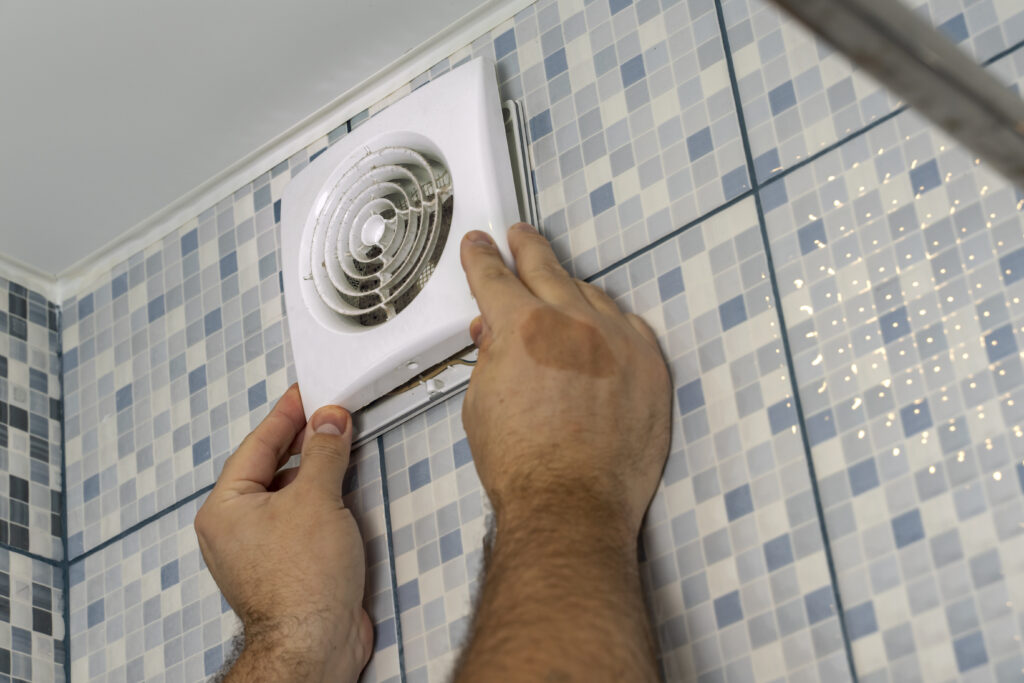
The bathroom exhaust fan exists for one reason: to remove warm, humid air from the house. However, have you thought about what happens if that air doesn’t quite make it outside the home?
Something every homeowner should be aware of is that bathroom fans can sometimes be improperly vented into the attic instead of outdoors. While this may seem like a harmless shortcut- after all, the duct does disappear through the ceiling and the fan looks and sounds like it’s working- this common installation mistake can send showers’ worth of moisture directly into an enclosed part of your home. That moisture can then contribute to condensation, mold growth, damp insulation, wood deterioration, and expensive repairs over time.
The U.S. Department of Energy warns that venting exhaust fans into an attic can create a major source of moisture, which leads to mold and moisture problems. Building America guidance is also equally clear: bathroom exhaust fans should always be ducted outdoors and not into an attic or crawlspace or any other enclosed area, for that matter.
7 Problems Caused by a Bathroom Fan Venting Into the Attic
Understanding how your bathroom fan is installed is important in order to protect your home’s indoor air quality and structural health. Here’s why you should never ignore a bathroom fan that vents into the attic.
1.Bathroom Moisture Goes Straight into Your Attic
Every single time you take a hot shower, you create moisture, and that warm, humid air needs somewhere to go.
If a bathroom exhaust fan is properly installed, it will pull the moisture out of the room and send it through a duct to the outside of the home. However, if the fan vents into the attic instead, the humid air doesn’t escape and, rather, comes into contact with rafters, colder roof sheathing, insulation, and other building materials.
A field study done by a Building Science Corporation showed that roof-deck moisture above an interior venting bathroom fan reached about 24% to 31% during midwinter, whereas comparable roof-deck readings with properly installed exterior-vented fans remained below 16%.
The EPA recommends keeping indoor relative humidity below 60% (ideal range of 30% to 50%), because excessive humidity can lead to mold growth. Showering is one of the activities that definitely increases indoor humidity, and improper bathroom fan venting can create severe moisture problems inside the attic.
2. Excess Moisture Can Lead to Mold and Wood Damage
We all know that moisture is one of the biggest contributors to mold growth. After a hot shower, when humid bathroom air repeatedly enters an attic, the resulting condensation can dampen the wood and other materials. If moisture isn’t controlled, that’s how mold develops.
The EPA emphasizes how essential it is to control moisture to prevent mold. A bathroom fan that vents into the attic works against that goal. During colder weather, this problem can be even more concerning because the attic surface can become much colder than the warm, humid air coming from the bathroom, and the temperature difference can encourage condensation on roof sheathing and other surfaces.
Over time, homeowners may notice visible mold growth, musty odors, discolored or deteriorating wood, and damp or compressed insulation. Additionally, there could also be dark staining on roof sheathing and excess moisture around the exhaust duct.
The key takeaway here is that attic issues are not immediately visible from inside the home. A perfectly clean-looking bathroom could quietly be accumulating moisture and can damage the home if not treated early.
3.It Doesn’t Meet Washington’s Ventilation Requirements
For Washington homeowners, having improper fan venting isn’t just a maintenance concern; some requirements specifically address bathroom exhaust that has to be up to code.
Washington’s residential code requires bathrooms and toilet rooms to have local exhaust capable of at least 50 cubic feet per minute (CFM) when operating intermittently or 20 CFM when operating continuously. The requirements additionally call for exhaust air to be discharged outdoors rather than into an attic or crawl space.
Even if your attic has vents, those vents are not intended to serve as bathroom exhaust vents. A bathroom exhaust system and an attic ventilation system have different purposes. The bathroom fan is designed specifically to remove moisture from the space, whereas attic ventilation is made to manage conditions within the attic and roof assembly.
Therefore, allowing bathroom air to move towards the attic does not accomplish the same thing as if it were properly moved outside.
4.Attic Ventilation is Not a Substitute for Proper Bathroom Exhaust
Jumping off the above, homeowners may think that attic vents eventually remove the moisture from the bathroom fan. This actually isn’t a reliable solution.
Building America recommends that bathroom exhaust fans should vent directly outdoors rather than into attics or crawlspaces. Attic ventilation fans intended to remove attic moisture have proven ineffective and can be detrimental in some situations because the attic ventilation system is not designed to receive a concentrated stream of humid air from a shower.
The bathroom exhaust needs its own designed path that leads outdoors, even if your attic has a soffit, ridge, or gable vents. The safest approach, therefore, is that the bathroom exhaust should be ducted directly outdoors through an appropriate exterior termination.
5.Poor Duct Installation Reduces Fan Performance
The ductwork of a bathroom fan can affect how well the system works – even when the bathroom fan vents outside. A long, crushed, poorly sealed, or excessively bent duct can restrict airflow. That means the fan could be running, but it’s not removing as much moisture as intended.
Building America recommends using the duct diameter specified by the fan manufacturer and taking the most direct route possible to the exterior. For proper installation, duct connections and penetrations need to be sealed. The Building America Solution Center recommends sealing exhaust duct seams and connections and properly sealing and flashing openings where the duct passes through the ceiling, wall, or roof.
This is all important because a bathroom exhaust system is only as effective as the path the air has to travel.
6.A Small Venting Mistake Can Turn into a Big Bill
Never ignore an improperly vented bathroom fan because it can lead to a large bill. Rerouting a bathroom exhaust duct to the exterior can cost about $200 to $600 per duct. To compare, moderate attic mold associated with just a single moisture source could run you up approximately $2,000 to $6,000 for remediation, and severe attic mold can reach $6,000 to $15,000 or more before additional sheathing replacement is considered.
The key takeaway here is simple: address the ventilation problem early before waiting until moisture damage becomes extensive. It’s the best way to prevent severe damage to your home and avoid a huge expense.
7.Seattle-Area Homeowners Should Pay Attention to Moisture
The Pacific Northwest usually experiences cool temperatures and wet weather. Therefore, moisture management is an important part of home maintenance because the climate makes it especially important to keep unnecessary moisture out of the attic.
Pacific Northwest guidance has raised concerns about the re-entrainment of humid exhaust air into vented attic spaces, including situations involving soffit exhaust configurations. Homeowners in Bellevue, Seattle, Kirkland, and surrounding areas should check for proper bathroom ventilation, especially in older homes or homes that have been renovated.
Here’s How You Can Tell if Your Bathroom Fan is Venting into Your Attic
Building America recommends checking the attic or crawlspace to determine whether bathroom and kitchen exhaust fans are actually venting outside. If you discover an improperly terminated duct, more attic ventilation doesn’t solve the problem; the moisture source needs to be addressed.
Potential warning signs to look out for include:
- An exhaust duct that ends inside the attic
- Moisture or condensation on roof sheathing
- Mold or mildew
- Damp insulation
- A duct terminating near a soffit or ridge vent
- A disconnected or damaged exhaust duct
What Should You Do if Your Bathroom Fan Vents Into the Attic?
Correct the exhaust route immediately so that the bathroom fan vents directly to the exterior.
Depending on the home’s layout, the duct may need to be routed through an exterior wall or through the roof. The final termination should be properly installed, sealed, and positioned according to applicable requirements.
Make sure you have checked to see whether the attic has experienced moisture damage. Existing mold, wet insulation, damaged sheathing, or deteriorated wood may require additional attention.
Don’t Let a Bathroom Fan Cause Chaos for Your Home
A bathroom exhaust fan may seem like a small fixture, but the way it’s installed can have a large effect on your home. Venting a bathroom fan into the attic doesn’t remove moisture from your home – it relocates warm, humid air into an area where condensation, mold, and material damage can develop.
The good news is that this problem can always be corrected once it’s identified, and addressing moisture problems early can help protect your attic, your home, and your wallet.