
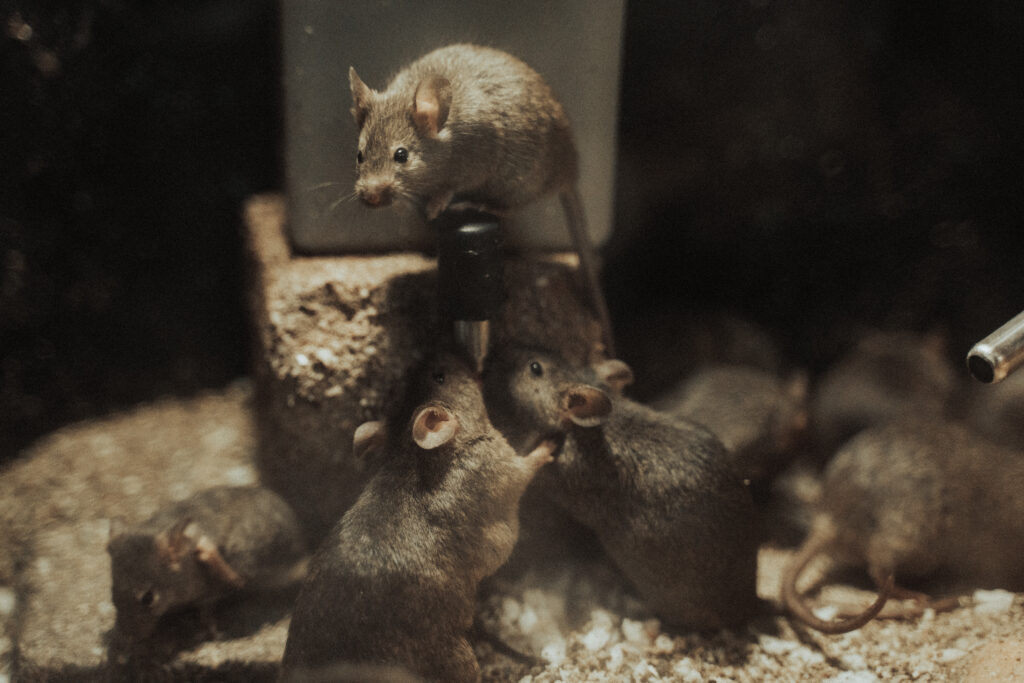
In the Pacific Northwest, moisture management of crawl spaces is a must for avoiding costly damage caused by pests and mold. This includes property damage and structural risks to your home as well as human health risks.
The Washington State Legislature recently tightened building codes in an effort to address moisture-related problems in crawl spaces, as a growing number of studies link moisture with pests, mold, and other crawl space issues.
“Keep in mind that the moisture is the problem, and the pests are the symptom,” researchers at Cornell University’s Integrated Pest Management program recently stated regarding moisture pests and the home.
This article can help you determine if you’re at risk for moisture-related crawl space problems, how these problems develop, and how they can be avoided.
Signs of Pests & Other Moisture Problems in Your Crawl Space
Ideally, moisture risks will be managed before a problem arises. However, in some cases homeowners might not act until there are visible signs of damage.
Signs of moisture pests in Seattle-area homes may include carpenter ant trails with sawdust piles, termite mud tubes on foundation walls, and rodent droppings (MoldRM, March 2023).
In other cases, homeowners might hear noises from pests in the crawl space, such as rodents’ scratching, gnawing, or scurrying.
Less-apparent signs include musty smells inside the home with visible standing water and/or mold colonies in the crawl space.
Types of Crawl Space Moisture
Water can get into the crawl space in a variety of ways, leading to pest or mold issues. Crawl space moisture can be categorized as independent issues, which we’ll look at in detail below, but keep in mind that these issues sometimes come about from a common cause.
A licensed professional can help determine the cause(s) of excess moisture in your crawl space to provide the right solution.
Humidity
Does Seattle’s high humidity affect crawl spaces in our area? The science points to “yes.”
Humid outside air can enter crawl spaces through the ground, open foundation vents, cracks, and gaps, making high humidity a cause of moisture in the crawl space.
“Crawl spaces where relative humidity (RH) is high are common sites of hidden mold growth, particularly if the crawl space has a bare earth floor,” the U.S. Environmental Protection Agency’s (EPA’s) Office of Air and Radiation states.
Conversely, low humidity may discourage cockroaches, dust mites, and other indoor pests, according to the EPA. Indoor humidity should be no higher than 60 percent, and ideally, between 30 and 50 percent (U.S. EPA, September 2014). Enclosed crawl spaces have a little more wiggle room, according to the agency, with a maximum of 65 percent humidity recommended to avoid dampness, mold, and related issues.
However, local pest-control professionals want Seattle-area homeowners to aim closer to the EPA’s ideal, with a recommendation of 40 to 55 percent relative humidity at 12 to 18 inches above the ground. As an additional precaution against excess moisture, they recommend alerts for instances when humidity rises by 10 percentage points in 24 hours or of sustained humidity above 60 percent (Redi National Pest Eliminators, February 2024).
Wet Wood
Wood in a crawl space can become wet from a variety of water sources: busted pipes, humidity, leaks in foundation walls, etc.
Wet wood is a problem when it comes to pests in your crawl space. Local pest professionals state that wood moisture content readings between 18 and 22 percent provide the ideal conditions for dampwood termites, carpenter ants, centipedes, and other moisture pests. The National Park Service, however, reports that carpenter ants will excavate wood at a moisture reading of about 15 percent.
“Dampwood and subterranean termites, carpenter ants, moisture ants, and rodents are common in local crawl spaces, and chronic dampness accelerates wood rot, insulation degradation, and mold growth—issues that can compromise structural integrity and indoor air quality,” warns Seattle-area practitioners Redi National Pest Eliminators.
The good news is, keeping humidity in the crawl space below 55 percent is shown to keep wood moisture below 15 percent, creating a hostile environment for carpenter ants and termites (Crawlspace Energy Institute, March 2023).
Intrusive/Standing Water
Any standing water in a crawl space should be dealt with as soon as it’s discovered to help keep mold and pests away.
More specifically, the EPA states that wet building materials and furniture should be dried within 24 to 48 hours to avoid the growth of mold (U.S. EPA, September 2014). For some pests, like cockroaches, mold and decaying wood are food sources.
Costs Due to Damage Caused by Crawl Space Moisture
Moisture pests in your crawl space can lead to structural and material damages, and even to sometimes serious health risks. Prevention is the best medicine, but quickly addressing any issues that arise is also critical to avoiding escalating risks.
In the 2024 State of the Termite Market report, termite professional Kolby Krohn highlighted how not addressing moisture issues often contributes to termite problems in the home (PCT / Specialty Consultants LLC, February 2024).
In the Seattle area, professional cleanup of rodent infestations in crawl spaces averages from $1,500 to $12,000 or more, with exterminations services adding another $500 to $1,500. Mold remediation in King County in a recent year came in at around $2,000 to more than $8,000 per incident (AmPm Exterminators, June 2024; NW Water & Mold, April 2024).
Mold and pests also come with serious health risks. As just one example, the CDC in 2025 reiterated that rodents in the home and around it are the number one risk for hantavirus.
Preventing Pests & Other Crawl Space Water Issues
Updated building codes help prevent moisture-related issues in crawl spaces in new homes, while local professionals can provide the situation-specific remedies required to get existing homes up to code.
In 2024, the Washington State Legislature updated the state’s building code to require mechanical exhaust of unvented crawl spaces at 1 cubic foot per minute per 50 square feet of floor, plus a continuous Class 1 vapor retarder over earth, with 6-inch sealed and overlapped seams. When relative humidity exceeds 60 percent, the code also requires automatic exhaust operation.
Related protective measures include:
- For ventilated crawl spaces, 1 square foot of net vent opening per 150 square feet of under-floor area, with at least one vent within 3 feet of each external corner for cross-ventilation, required by the 2024 International Residential Code
- For crawl spaces with ventilation less than 1 square foot per 300 square feet, or with vents having operable louvers, a radon vent is required between the ground cover and soil, per Washington state building code
- The need to reinstate a required 6 mil black polyethylene ground cover in crawl spaces to reduce moisture-related issues and stack effect, per the Washington State Legislature
- Similarly, the EPA recommends placing a plastic cover over dirt to prevent moisture from seeping into the crawl space via the ground, as well as making sure the space is well-ventilated
- EPA recommendations for enclosed crawl spaces include controlling relative humidity to less than 65 percent via ventilation when the dew point outside is below 55°F, or using dehumidifiers when necessary
- Grading the ground so that water drains away from the home can help stop water from entering crawl spaces, per King County Public Health
- Further recommendations from the EPA include making sure that water is discharged from gutters no closer than 5 feet from the home’s foundation to avoid seepage into the crawl space or basement
Local professionals also recommend monitoring crawl spaces to make sure that moisture issues aren’t circumventing these prevention protocols. This includes options like twice-yearly scheduled inspections of crawl spaces, one prior to the rainy season and one following it, or continuous monitoring via one temperature and humidity data logger and one water sensor per 400 to 600 square feet of crawl space area, and extra sensors near mechanical equipment and low spots (Redi National Pest Eliminators, February 2024).
Attic Doctor Can Help
The crawl space specialists here at Attic Doctor are standing by and ready to help ensure that your crawl space stays problem-free. Contact us today to schedule an appointment or get a quote.