
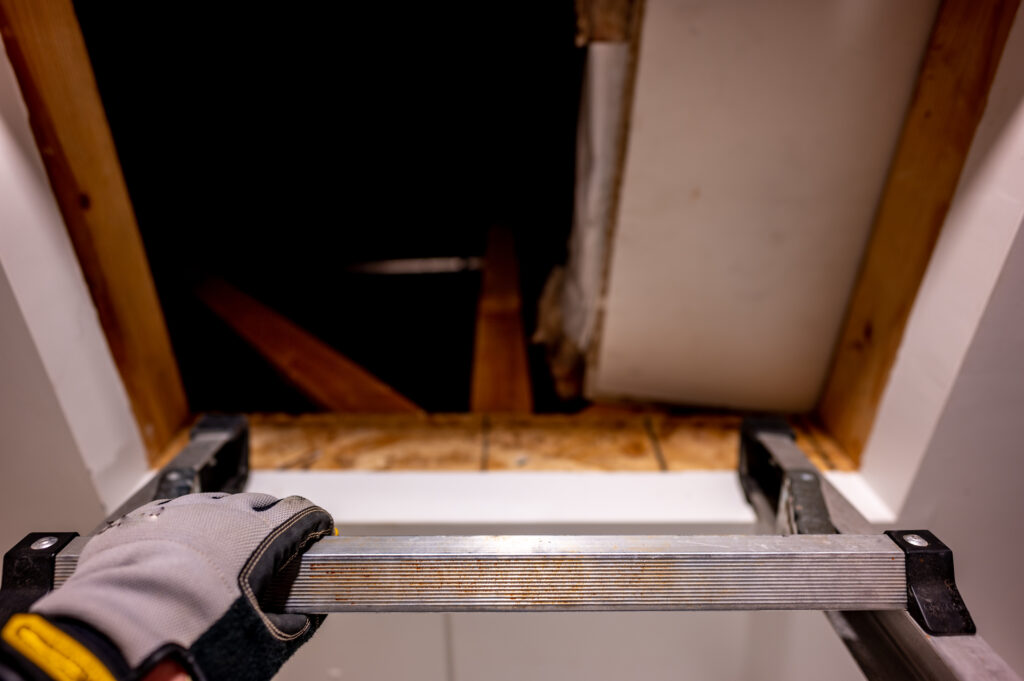
DIY inspections have become extremely popular over the last few years. Homeowners especially think they can manage a quick attic or crawl space check and work on fixing a few things here and there. Sounds simple enough, right? Grab a flashlight, take a look around, and see if there is anything that needs to be done.
What homeowners may not know is that they might actually miss something that often causes the most damage, and stepping into these spaces without the right knowledge or protection isn’t just risky, but can also be dangerous to your health and your home. Things like hidden asbestos and airborne toxins could be present, and it’s often safer to call a professional to look into these issues if you think they are prevalent in your home.
DIY Inspections Can Be Misleading
While a glance into your attic or crawl space might give you peace of mind, it could also give you a false sense of security – some issues just aren’t visible at first glance, and some, believe it or not, become dangerous when you disturb the area.
For example, attic falls make up about 30% of home inspector injuries, often due to unstable joists or missteps in tight spaces. Even more concerning, 1 in 5 of those injuries requires an emergency room visit.
Moisture is often one of the biggest hidden threats in crawl spaces. What may look like a small damp area can quickly escalate. Standing water is linked to approximately 80% of structural rot cases, turning what could have been a minor fix into repairs costing anywhere from $5,000 to $20,000.
Let’s not forget about air quality. Around 40% of uninspected crawl spaces develop mold from condensation, with remediation costs averaging over $3,000. These aren’t rare,, worst-case scenarios, they’re common outcomes when issues go unnoticed or untreated.
3 Things You Can Safely Check Yourself
While you want to be cautious, some things might not require a professional right away. There are a few low-risk ways to stay proactive as a homeowner without putting yourself in harm’s way. Here are three.
1. Look, Don’t Enter
One of the safest things you can do is a visual inspection from a distance. If you are able to check your attic from the hatch or observe your crawl space without physically entering it, you’re in a safe zone.
Keep an eye out for:
- Any light coming through the roof boards (a sign of air leaks)
- Insulation that looks thin, uneven, or sagging
- Any obvious signs of pests, like nesting material.
Something as simple as spotting light gaps can be meaningful because those leaks alone can account for about 20-30% of your home’s energy loss, which can add hundreds of dollars to your annual heating bills.
2. Pay Attention to your Home
Your home often gives clues before problems become visible. Watch out for musty or damp odors, uneven temperatures from room to room, sudden spikes in energy bills, and increased allergy symptoms indoors.
While these signs may seem minor, they often point to larger issues like insulation gaps, moisture buildup, or poor ventilation.
3. Check the Exterior
The biggest clues can often be spotted outside your home.
So, take a walk and look around for:
- Water pooling near your foundation
- Cracks in visible foundation areas
- Roof lines that appear uneven or tagging
- Openings where pests could potentially enter
If you spot a crack wider than a quarter inch or notice consistent water buildup, it’s definitely a strong signal that something deeper could be going on beneath the surface.
6 Signs it’s Time to call the Pros
Now, here’s when you need to call the professionals. The moment an inspection requires entering right spaces, disturbing materials, or messing with unknown substances, it’s no longer a DIY kind of situation. Watch out for these six signs.
1.Suspected Asbestos
If your home was built before the 1980s, there’s a high chance your attic could contain vermiculite. The issue is that 85% of vermiculite insulation tests positive for asbestos.
Disturbing this releases microscopic fibers that can lead to serious lung diseases, including mesothelioma. You also won’t see it happening; a professional needs to conduct air testing to detect it.
2. Standing Water or Excess Moisture
Be wary of water in a crawl space. It isn’t just water; it often is a starting point for mold growth, wood rot, and foundation damage. If left unstreaded, these issues can escalate quickly, and what seems like a small moisture problem can turn into a full structural repair job.
3. Mold and Airborne Toxins
Certain types of mold, especially black mold, thrive in damp environments and release toxins into the air. At high humidity levels, exposure can happen faster than most people realize, even through skin contact in some cases.
Without having the proper protective equipment, entering a mold-affected space is a serious health risk.
4. Rodents and Contaminants
Rodent infestations are more than just a nuisance. About 25% of attics show signs of animal droppings, and disturbing them can release airborne pathogens. In some cases, diseases like hantavirus can become airborne when droppings are moved. In this case, standard masks aren’t even enough protection.
5. Electrical and Fire Hazards
Beware of damaged wiring, as this is another hidden danger. Rodent-chewed wires are linked to about 5% of residential fires.
- In high attic temperatures (exceeding 120°F), exposed wiring can ignite surrounding insulation. These are definitely not risks you want to uncover firsthand.
6. Structural Instability
This is one of the biggest red flags. Crawl space beams and attic joists can weaken over time due to moisture, pests, or age. What makes this especially dangerous is that structural damage isn’t always visible until it’s severe. Professionals are trained to identify early warning signs, before collapse becomes a possibility.
Hidden Risks Often Missed
Experience DIYers can also overlook what professionals catch right away. For example:
- Vapor barriers fail at the seams in nearly 70% of installations, allowing moisture to creep in
- Termite activity can weaken support structures long before any sagging appears
- Shared attic spaces on condos can allow fire and smoke to spread between unites if not properly sealed
These are issues that require specilized tools such as thermal imagines and moisture meters to detect.
Real-Life Consequences
These risks are not hypothetical:
- A home inspector once suffered heat stroke in a 130°F attic and fell eight feet after stepping in the wrong place
- A Seattle-area homewoener was hospitalized for nearly two weeks after exposure to hantavirus in a crawl space
- A condo association in Bellevue faced a $250,000 lawsuit after a DIY attic sealing job allowed fire to spread between units.
All of these situations started with something that seemed manageable at the time.
Key Takeaways
Recent trends are making attic and crawl space issues more common and more severe. On the PAcific Northwest, rising humidity levels have accelerated mold growth, with claims increasing isgnificantly in recent years. Rodent activity has also surged, leading to more damage in crawl spaces and attics.
Building codes are also evolving. In Washington, newwer regulations are requiring professional asbestos inspections in older homes, and DIY work that doesn’t meet standard can impact insurance coverage.
The margin of error is shrinking.
Remember this:
- Looking is usually safe
- Entering is where the risk begins.
Your home and your health is important. Don’t take unnecesary chances and when it doubt, trust your gut and call the pros.