
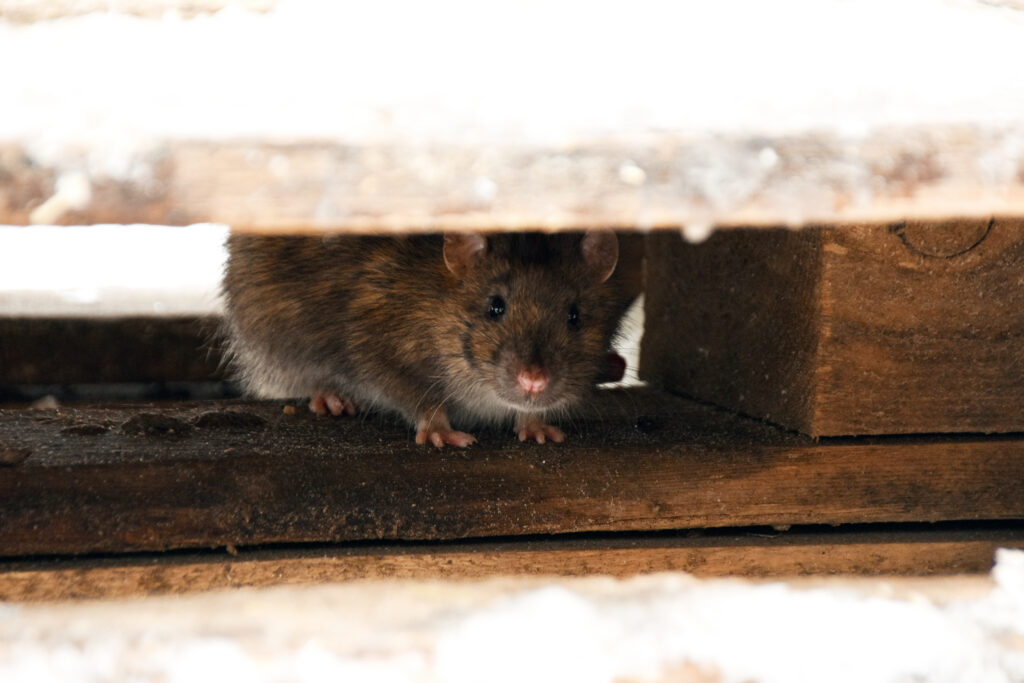
When homeowners think about how to keep rodents out, they generally only consider the typical places. That crack in the basement window or the gap beneath the garage door seem probable places to start, but they’re rarely the whole story. From what we’ve seen working in attics and crawl spaces throughout the Greater Seattle area, the most expensive rodent issues don’t often start with an obvious hole.
Problems usually begin with a hole so small most people don’t even give it a second look. The utility line that passes through an exterior wall, a loose roof vent, a gap along a soffit, or a crawl space penetration hidden behind some landscaping. When you take a look at the areas that are easy to overlook, those out of sight, out of mind places, this is generally where you find the most problems. Rodents don’t need much of an invitation, and homeowners don’t spend a lot of time crawling around beneath their homes.
Health officials consistently point out that mice can squeeze through openings as small as a quarter of an inch. This is about the width of a pencil. Once you think about that size and look around your home, it’s surprising how many potential entry points you’ll notice.
In our region, this isn’t a hypothetical concern. Seattle, Tacoma, and Bellevue ranked among the highest major metro areas for reported rat sightings, with roughly 28,600 households reporting rats within a 12-month period. For homeowners here, rodent proofing isn’t a seasonal maintenance concern; it’s an ongoing part of protecting the building.
Places People Don’t Check
Most rodent entry points are either above eye level or below it. That sounds simple enough in theory, but it explains why they’re so often missed. Attics, crawl spaces, rooflines, vent penetrations, soffits, eaves, and the areas where plumbing, electrical, or HVAC lines go into the home tend to receive very little attention until another project uncovers them.
When customers tell us they checked everywhere, they’re usually being honest. They checked everywhere they could easily see, but the hidden parts of a house play by different rules. A small separation around a pipe might not seem important today. Add on a few years of weather, settling, and normal expansion and contraction, and suddenly there’s enough room for a mouse to squeeze through. It’s one of those difficult to notice maintenance issues that gradually develops, so it’s easy to miss.
Crawl Spaces Tell the Whole Story
If you’ve never been inside your crawl space, you’re not alone. Most homeowners don’t spend much time there. But crawl spaces often reveal how rodents are actually moving around a property. We’ve seen situations where exterior gaps led directly into insulation cavities. We’ve also seen signs of burrowing near foundations that homeowners had no idea existed because everything above ground looked perfectly normal.
One case in the Seattle-area involved widespread rodent tunneling and damage inside and outside the crawl space that was so severe it required a concrete slab to be put over the entire crawl-space floor to stop tunneling. Another case revealed an 18” tunnel under a foundation that allowed Norway rats to freely enter a crawl space.
These are obviously extreme examples, but they illustrate an important point: sometimes the entry point isn’t in the wall or roof. It’s under the house. Although such situations sound like a horror film, they are actually much easier and far less expensive to address because the rodents haven’t become established within the home.
Rooflines Matter More Than You Realize
Roof rats really earned their name. Unlike Norway rats, which often stay closer to the ground, roof rats readily use things like trees, fences, utility lines, and roofs to access homes. That’s why we spend so much time looking at roof transitions, vent flashing, ridge intersections, soffits, and eaves during inspections.
We often see small construction details that have loosened over time or materials that have simply reached the end of their service life. No homeowner walks around thinking they should inspect the flashing where the roof sections meet, but rodents absolutely notice those gaps.
Your Utility Lines Are Easy to Ignore
Every home has dozens of places where something passes through the exterior. Things like water and gas lines, electrical conduits, cable connections, HVAC penetrations, and dryer vents all create an opening that needs to remain properly sealed over the life of the home.
Sometimes the original sealant around these lines dries out and cracks, leaving gaps. A homeowner adds cable service, and the install leaves a larger opening than intended. Then an HVAC repair solves one problem and accidentally creates another. None of this is unusual. What surprises many homeowners is how quickly rodents can take advantage of these changes when they happen.
Waiting Can Cost More Than Sealing Early
This is probably the biggest misconception we encounter in the field. Many people assume trapping rodents is the solution. Trapping certainly can be part of it, but without addressing the entry points it’s often only temporary. If rodents can still enter the home, new ones will eventually replace the ones that were removed. That’s why exclusion should come first.
Industry estimates around Seattle place the cost of professional exclusion work somewhere between $800 and $2,500, depending on the home and the length of repairs involved. If you compare that cost with a full attic restoration after a prolonged infestation, which can run from $3,000 to $10,000 or more once you factor in cleanup, sanitization, and insulation replacement, the economics of the situation start to look very different.
Nobody enjoys spending money on preventative maintenance. We understand that. However, it’s often far less expensive in the long run. Prevention rarely feels valuable until you compare it with the alternative.
Rodent Damage Isn’t Always Visible
Another thing we’ve learned is that rodents don’t necessarily leave obvious evidence right away. The attic insulation may still look fine from the access hatch where you’re standing. Sure, the crawl space may appear clean around the perimeter. Meanwhile, activity is happening inside the insulation, behind the walls, or along framing members where nobody routinely looks.
This is just one reason annual inspections are so important, especially in areas like Western Washington where rodent pressure remains consistently high. Finding a small issue while it’s still a small issue tends to evolve into a far better ending.
It’s More Than Just the Rodent Droppings
Nobody likes to deal with poop, but rodents can also damage insulation, create air quality concerns, and chew electrical wiring. This last point deserves a little more attention than it sometimes gets.
Electrical malfunctions remain the leading cause of residential attic fires, and while not every wiring issue is caused by rodents, damaged wiring is never something to dismiss as merely cosmetic. By the time evidence of chewing actually becomes visible to homeowners, there’s often a lot more activity hidden nearby.
A Better Way to Think About Rodent Proofing
It’s not just about closing one hole… or even two. Rodent proofing is about understanding how a home functions as a system. The attic connects to the roofline. The crawl space connects to the foundation. Utility penetrations connect every major system inside the home. Air moves through all of these spaces, moisture moves along with it, and unfortunately, rodents can move through them too.
When those vulnerable areas are inspected together instead of separately, it’s much easier to identify problems before they grow into expensive repairs. That’s ultimately what we try to help homeowners do here at Attic Doctor. If you’re having issues with rodents, have a question, or need some advice, we’re here to help. Call us at (425) 600-3075, email us at admin@atticdoc.com, or get a free quote.
Not because every tiny gap automatically means you have rodents, but because knowing where those vulnerable spots exist gives you the chance to address them on your own schedule instead of after they’ve already caused some damage. Remember, the opening that matters most is generally the one nobody thought to look for.