
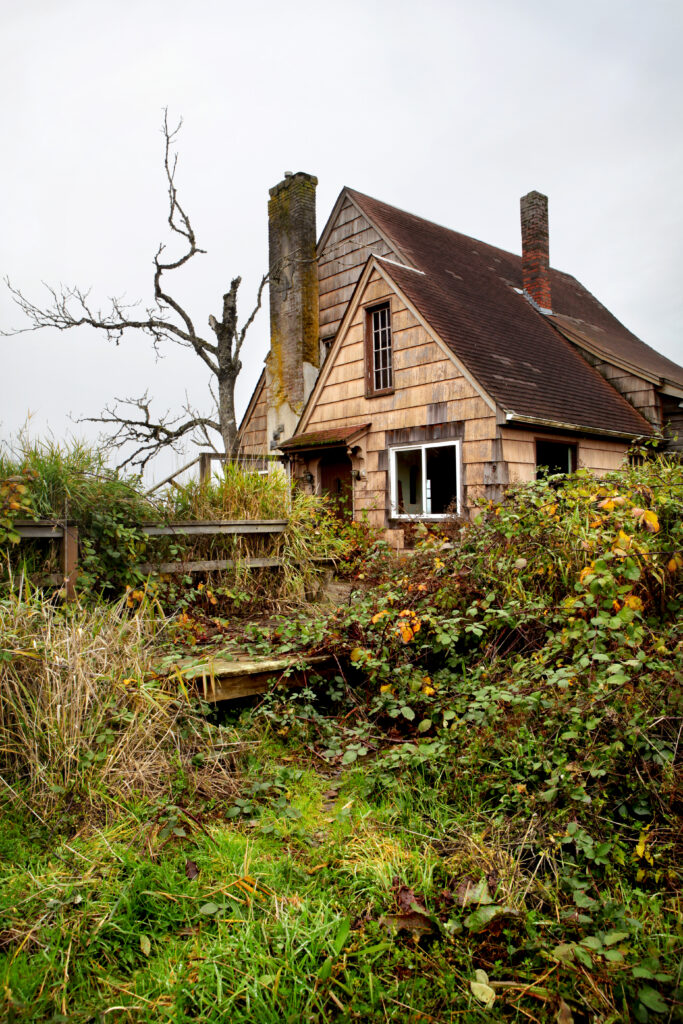
Buying an older home comes with many benefits that appeal to homebuyers today, including architectural aesthetics, mature landscaping, superior location, and even sometimes lower purchase prices and property taxes.
But older homes also come with potential downsides, like higher maintenance costs, hidden infrastructural issues, and outdated designs.
In the Pacific Northwest, attic issues like condensation and improper ventilation are things people looking to buy older homes want to keep an eye out for to avoid costly damage and other risks.
Common Attic Issues in Older PNW Homes
When it comes to attic issues in Seattle and the greater Pacific Northwest region, people often falsely assume that the heavy rain combined with leaky roofs is to blame.
Other factors are more commonly the culprits, and they are linked to the PNW region’s wet climate, which sees about 40 to 80 inches of rain annually and winter humidity in the 80-to-90-percent range (Pacific Northwest Attic Solutions, June 2026).
Keep an eye out for the following issues when considering buying an older home in our area. The professionals here at Attic Doctor can also help with PNW attic inspections.
Condensation: Check Colder Sections of Roof Over Warm Living Spaces
Condensation in the attic due mostly to air leakage, poor humidity control, or faulty exhaust duct routing can lead to mold and other attic issues. Almost all (more than 95%) of Seattle attic mold cases were caused by condensation, not rain leaks, local indoor environmental solutions company Environix found.
“Caulking or other sealing material should be added to all gaps around ceiling penetrations, and weatherstripping should be added to attic access doors,” the Oregon Administrative Rules for existing residential buildings states, along with, “To prevent moisture condensation: Adequate ventilation should be provided above insulation.”
A guide from Seattle Roofing Company states that condensation mold in Seattle attics is often concentrated above heated living spaces on north-facing, colder sections of the roof, whereas unheated garages are notably less affected. Moisture can condense on the underside of the sheathing even when the attic is ventilated and obvious sources of indoor moisture have been addressed (RDH Building Science, March 2015; James Higgins presentation, April 2019).
Wood Moisture, Especially in Coastal Homes with Vented Wood-Frame Roofs
Closely related to condensation is moist wood, which is especially an issue in coastal homes with vented wood-frame roofs.
Research done in our area shows that when indoor relative humidity is above about 70%, and attic surface humidity is above about 80%, mold growth on roof sheathing is common. The same research reported that wood moisture content of 30% is considered severely wet (Oak Ridge National Laboratory and ASHRAE-related conference sources, July 2013).
A wood moisture content of above 20% is also considered a “critical moisture condition requiring immediate remediation,” according to a local roof-sheathing moisture guide, with below 12% considered dry, normal wood and between 16% and 20% an active moisture problem. The relative humidity in the attic should stay below 70%, with an indoor relative humidity in the winter between 40% and 50%, to keep wood drier, other regional guidance recommends (Pacific Northwest Attic Solutions, June 2026).
However, potential homebuyers should be aware that in PNW homes with vented wood-frame roofs, mold growth on roof sheathing and other moisture problems are common even when indoor moisture has been addressed, according to experts at RDH Building Science. These homes were frequently found with roof sheathing moisture contents above 20% during the wet season—significantly above the 16% threshold for mold growth and nearing risk of decay issues, starting around 28% (Pacific Northwest attic hygrothermal studies, March 2015).
“In coastal areas of the Pacific Northwest, moisture problems including mold growth on roof sheathing are common in vented wood-frame roofs,” researchers at RDH Building Science recently stated. They also warn, “This wetting cannot be prevented by ventilation alone … worse, this research indicates that the typical preventative approach of attic ventilation only exacerbates the problem” (RCI conference paper hosted by GreenBuildingAdvisor, March 2015).
One case study that backed this up involved a local townhouse complex with roof slopes between 3:12 and 6:12 that developed mold despite standard ventilation design, RDH Building Science reported.
Inadequate Ventilation and/or Insulation
That brings us to the next common culprit of attic issues in the PNW: inadequate ventilation. In fact, Trusted Home Inspections found it to be “the single most common attic finding” in recent Portland home inspections, with attic mold another common finding.
In both Oregon and Washington, building codes require an attic ventilation ratio of at least 1 square foot of net free vent area per 150 square feet of attic area. A reduction to 1:300 is allowed only with installment of a Class I or II vapor retarder and between 40% and 50% of vent area located up high in the attic, near the ridge.
In addition, Washington requires airspace of at least 1 inch between roof sheathing and insulation in ventilated attics. Oregon requires the same, mandating that bridging and blocking not interfere with airflow (Washington Administrative Code, August 2026; Oregon Structural Specialty Code, November 2025).
The Washington State Department of Health stated: “Ventilate and insulate attic and crawl spaces” as part of its mold-prevention guidance for homeowners (Washington State Department of Health, January 2023).
Complicating the issue, however, is a case study out of Bellevue involving a 12-unit multifamily building with an unvented roof assembly that never saw wood moisture contents exceed 25%, leading researchers to conclude that wood rot would not be expected. This is important to note because not every attic problem in our area is solved by venting.
Water/Ice/Weather Damage
In PNW homes, damage caused by water, freezing, or weather is another thing potential homebuyers want to keep an eye out for.
Nearly one in every 60 insured homes has a property damage claim involving water damage or freezing, with about 1 in 35 having one related to wind or hail (Northwest Insurance Council, September 2025).
State Farm alone received more than 20,000 claims for water damage caused by freezing, including ice-related roof damage, in a recent 18-month period, paying out over $628 million in losses, or over $30,000 on average per claim. Both Washington and Oregon made the “top five” states with the highest totals in claim costs (Carrier Management, January 2026).
Vented Air from Bathroom & Kitchen Fans
In Portland, many homes have bathroom exhaust fans that vent into the attic, identified as one of the leading causes of attic mold by Trusted Home Inspections.
The good news is, this is a relatively easy and affordable fix compared to some of the other attic issues discussed here, coming in at about $150 to $500 per fan.
Outdated Insulation & Asbestos Contamination
People looking to buy older homes in our area also have non-moisture-related attic issues to consider, including outdated insulation.
The Washington State Department of Health recently reported that over 50,000 homes in Washington may contain Zonolite or other vermiculite products associated with asbestos contamination. The U.S. Environmental Protection Agency (EPA) urges homeowners to err on the safe side and assume that vermiculite may be contaminated with asbestos. It further advises to leave it undisturbed unless the problem is handled by accredited abatement professionals.
The vermiculite insulation came from a mine in Libby, Montana, excavated between 1923 and 1990, making homes in Washington state built or renovated during that time vulnerable (Washington State Department of Health, January 2023). Millions of homes and businesses nationwide are considered at risk.
Outdated Electrical Wiring
Finally, people interested in buying older homes want to be on the lookout for knob-and-tube wiring in the attic, as outdated electrical systems create a dangerous and costly fire risk.
Over 6,800 residential fires are linked to outdated electrical systems each year in the U.S., causing about $868 million in property damages. When active knob-and-tube wiring is present, approximately two-thirds (between 65% and 70%) of major home insurers have been reported to deny coverage or require immediate replacement (KD’s Home Buyers, April 2026).
An Idea of Associated Costs
Costs to address common attic issues in the Pacific Northwest can range from hundreds to tens of thousands of dollars.
On the more affordable end, bathroom exhaust fans venting into the attic cost around $150 to $500 per fan to address. This could be considered an especially affordable preventative measure given that the average residential attic mold remediation in Seattle has been shown to cost $4,000 to $12,000 (Narestco, June 2026).
Home inspection reports out of both Portland and Southwest Washington frequently cite attic mold, Trusted Home Inspections stated earlier this year.
Examples of base prices for knob-and-tube replacement in Portland include $3,495 per main area, such as the attic, and $8,000 to $30,000 or more for whole-house replacement (Bridgetown Electric, August 2026; Smiley Electric, March 2026).
Recent PNW Attic Code Changes & Updated Recommendations
State lawmakers and local experts frequently update building code regulations and professional recommendations to reflect the growing knowledge around smart construction.
Recent updates pertaining to PNW attics include:
- Washington’s 2021 residential energy code, second edition (effective on March 15, 2024): Now requires access hatches and doors between conditioned and unconditioned spaces to have the same R-value required for the adjacent ceiling or wall
- January 2025 reiteration by Oregon’s Energy Conservation Standard for Existing Residential Buildings: Any gaps around ceiling penetrations need to be caulked or otherwise sealed, attic access doors need weatherstripping, and adequate ventilation needs to be provided above insulation to prevent condensation
- March 2025 updated marine-climage guidance from BC Housing: Attic ventilation via exterior vents acts as both a main source of moisture and a remover of it, and the 1:300 code requirement for attics generally provides too much ventilation in marine climates
- September 2025 updated regional commentary from RDH Building Science: Emphasized that mold growth on roof sheathing and other moisture problems remain common in vented wood-frame roofs in the coastal PNW
Simplified Solutions from Attic Doctor
With experience in attic insulation replacement, mold remediation, ventilation solutions, air duct refurbishment, inspections, rodent-proofing, and more, our licensed professionals are standing by to serve all of your attic needs.