
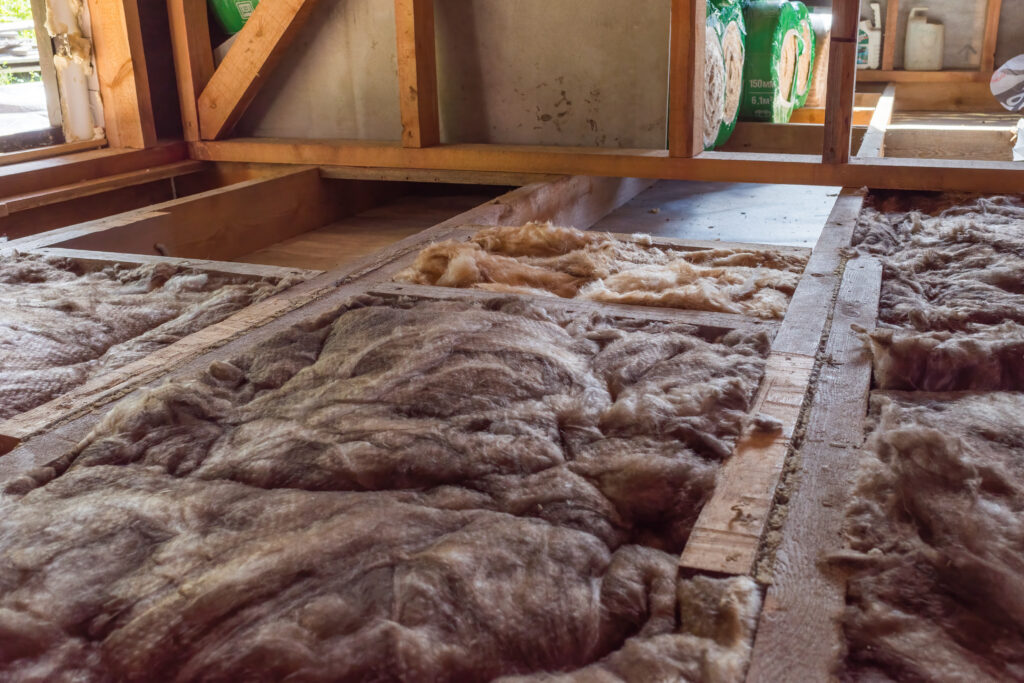
The Pacific Northwest enjoys mild temperatures and long rainy seasons, which result in lush greenery for homeowners to enjoy. With winters rarely bringing extreme cold, homeowners assume that attic insulation doesn’t need to be a priority. However, with the marine climate experience in the PNW, poorly insulated and unsealed attics can quickly become one of the biggest threats to both home health and human health.
Humidity levels that are persistent between 60-90% trap moisture, affect insulation and allow air leaks that ultimately waste up to 25% of a home’s heating and cooling energy through the attic alone. Over time, this creates conditions that can contribute to mold growth, poor indoor air quality, pest contamination, and rising utility costs. And all of this comes without obvious warning signs.
Homeowners across Seattle, Bellevue and the surrounding areas therefore need to understand what’s happening above their ceilings to protect their comfort, health and long-term property value.
Hidden Health Risks Linked to Poorly Insulated Attics – Why They Matter
Here are seven hidden health risks every homeowner must pay attention to – especially in the PNW.
1.Mold Growth Fueled by Persistent PNW Humidity
The PNW experiences more than 155 rainy days per year, and this persistent dampness gradually works its way into attic spaces. Over time, insulation absorbs moisture, compresses under its own weight and eventually loses effectiveness.
Once that insulation becomes wet or compacted, cold surfaces are created where condensation forms, creating a gateway to mold growth on framing, insulation, and roof decking. Mold spores don’t just stay in the attic.
Through stack effect and air leakage, they can circulate downward into living spaces. This can pose a risk to our health as it contributes to respiratory irritation, allergies, headaches and worsened asthma symptoms especially for children and older adults.
2. Energy Loss that Impacts Comfort and Health
Heating and cooling account for roughly 50-70% of total household energy use, 25% of that energy is lost through poorly insulated attics.
This loss doesn’t just raise utility bills, it also causes uneven temperatures, cold floors, and drafts that reduce overall comfort and increase reliance on mechanical heating.
On average, homeowners lose about $480 per year due to attic air leakage alone.
3. Air Leaks are a Big Health Hazard
As mentioned, a poorly sealed attic doesn’t just waste energy; it actively pulls contaminants into the home. Dust streaks on insulation and uneven insulation depth are all red flags that indicate major air leakage pathways.
When the air escapes upward, replacement air is drawn in from crawl spaces, wall cavities, and garages. This introduces pollutants, allergens, and can even attract rodent-contaminated air into living spaces.
Building Science corporation says that proper air sealing before insulation is extremely critical to preventing these issues. Without it, even high R-value insulation underperforms and allows moisture to circulate freely.
4. Ice Dams that Lead to Hidden Structural Damage
Believe it or not, ice dams are not just exclusive to cold climates. In the PNW, they can appear in older homes with poor attic insulation and air sealing. Heat that escapes through the attic melts snow on the roof, which refreezes at the eaves and forces water under shingles.
This leads to roof leaks, mold and wood rot, unfortunately, long before the damage becomes visible inside the home.
5. Moisture-Damaged insulation Loses Effectiveness
Regardless of original rating, compressed or water-damaged insulation loses nearly all R-value after 15-20 years in the PNW’s damp climate. This means that even though many homes appear to be insulated are not actually receiving meaningful thermal protection.
Washington data shows that 90% of single-family homes are under insulated, especially those built before modern energy codes.
6.Cellulose Insulation Problem in Marine Climates
Often marketed as an eco-friendly solution, cellulose insulation has proven to be problematic in attics. Local contractors have even stopped installing cellulose in vented attic spaces more than 20 years ago after widespread issues with water absorption, settling, mold growth and added weight.
“Our persistent moisture can cause cellulose to settle greatly, promote mold growth, and become a fire hazard,” note Attic Doctor specialists based on years of regional experience.
Contractors in the Seattle area found that repeated moisture caused it to compress and fail prematurely in attic applications, leading to a shift from cellulose to fiberglass and closed-cell spray foam instead.
7.Missed Rebates and Rising Retrofit Costs
Energy efficiency programs are changing – and fast. Since 2033, stricter enforcement of R-49 attic standards has led to an increased retrofit demand by more than 20%. Rebates between $750 and $2,625 – along with programs like Seattle City Light’s Homewise can cut upgrade costs by 50% or more. However, keep in mind that many incentives are time-limited.
Delaying upgrades can mean high costs and missed savings as energy rates continue to rise.
Insulation Materials that Perform Best in the PNW
Based on long-term regional performance, professionals recommend the following to PNW homeowners.
- Closed-cell spray foam. This provides R-6 to R-7 per inch and acts as an effective moisture barrier.
- Blown-in fiberglass. This resists mold growth and settles less than cellulose in damp conditions.
These materials perform best when combined with thorough air sealing and verified airflow through ridge and eave vents.
Real-World Examples to Pay Attention To
In 2023, a Seattle home that was undergoing a roof replacement revealed severe attic insulation degradation after moisture intrusion from aging shingles. Contractors then removed compromised insulation and installed R-49 ProCat synthetic insulation, paired with improved ventilation, to stop mold growth and restore energy performance.
Similar cases across the region have reinforced why many PNW contractors permanently moved away from cellulose insulation in attics in the mid-2000s.
Key Points to Consider
Attic problems rarely announce themselves – especially in the Pacific Northwest. Instead, they quietly degrade insulation, waste energy, and compromise indoor air quality over time.
With 90% of regional attics under-insulated, homeowners could be losing about 25% of their energy and hundreds of dollars per year without even realizing it. More importantly, the persistent humidity combined with poor air sealing can lead to mold and rot, which poses a serious risk to homeowners’ health.
Addressing attic insulation and air sealing as soon as possible, well before materials reach the 15-20 year failure point, is one of the most effective ways to protect your home, your health and your energy budget in the long run.